
Indoor Narrow Pixel Pitch LED Display Buying Guide: P1.2–P3 Comparison, Applications & Selection Tips
/Indoor Narrow Pixel Pitch LED Display solutions have become the inevitable trend for modern indoor visualization, replacing traditional LCD video walls and DLP rear-projection systems in high-end commercial, corporate, and professional environments.
Indoor Narrow Pixel Pitch LED Display by Rigard LED
As pixel pitch continues to decrease and LED packaging technology advances, indoor narrow pixel pitch LED displays now deliver ultra-high resolution, seamless visuals, superior brightness uniformity, and long-term reliability. However, with multiple options such as P1.2, P1.5, P1.8, P2.0, P2.5, and P3, many buyers face a critical question:
Which pixel pitch is the right choice for my application, budget, and viewing distance?
This comprehensive guide will walk you through:
- Core technical parameters of indoor narrow pixel pitch LED displays
- A detailed comparison of six mainstream models
- Scenario-based selection strategies
- Installation considerations and FAQs
Helping you make an informed, future-proof investment decision.
Why Indoor Narrow Pixel Pitch LED Display Is the Future of Indoor Visualization
An Indoor Narrow Pixel Pitch LED Display typically refers to LED screens with a pixel pitch of P2.5 or smaller, designed for close-viewing indoor environments.
Key Advantages Over Traditional Display Technologies
- Seamless display without bezels
- Scalable size and flexible aspect ratio
- Higher brightness consistency
- Longer lifespan and lower maintenance cost
- Superior color uniformity and contrast
As costs continue to decline and image quality improves, narrow pixel pitch LED displays have become the preferred choice for control rooms, conference rooms, broadcast studios, exhibition halls, retail flagships, and digital command centers.
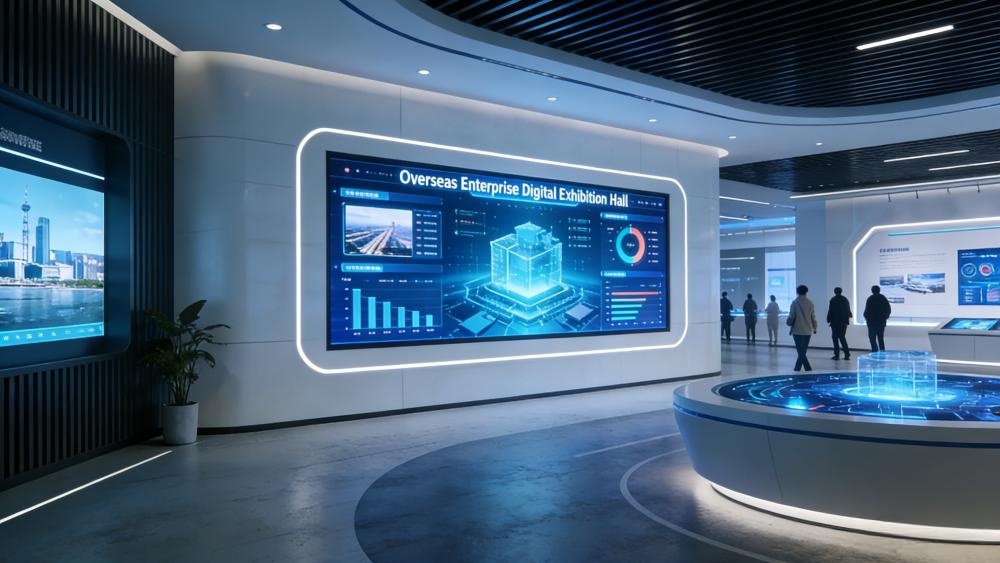
Indoor P1.5 LED full-color display enterprise digital exhibition hall
Core Parameters of Indoor Narrow Pixel Pitch LED Display Explained
Pixel Pitch and Pixel Density
Pixel pitch refers to the distance (in millimeters) between the centers of two adjacent pixels. Smaller pixel pitch means higher resolution and better close-viewing experience.
Pixel Density Formula
Pixel Density (dots/㎡) = 1,000,000 ÷ (pixel pitch²)
Resolution and Optimal Viewing Distance
Resolution depends on screen size and pixel pitch. Choosing the right viewing distance is critical for maximizing visual comfort and cost efficiency.
- Minimum viewing distance ≈ pixel pitch × 1,000
- Optimal viewing distance ≈ pixel pitch × 2,000–3,000
Brightness (nits / cd/m²)
For indoor narrow pixel pitch LED displays, recommended brightness typically ranges between 300–800 nits.
- Excessive brightness causes eye fatigue
- Smart brightness adjustment improves comfort
Refresh Rate and Gray Scale
High refresh rate (≥ 3,840 Hz) ensures flicker-free performance for camera shooting, while higher grayscale enhances color depth and smooth gradients.
Contrast Ratio and Color Gamut
High contrast improves text clarity and image depth, while wide color gamut ensures realistic color reproduction, especially in high-end visualization environments.
LED Packaging Technology: COB vs SMD
- COB (Chip on Board): Higher reliability, better moisture resistance, superior black consistency, higher cost
- SMD (Surface Mount Device): Mature technology, cost-effective, easy maintenance
Rigard LED provides both COB and SMD indoor narrow pixel pitch LED display solutions based on application requirements.
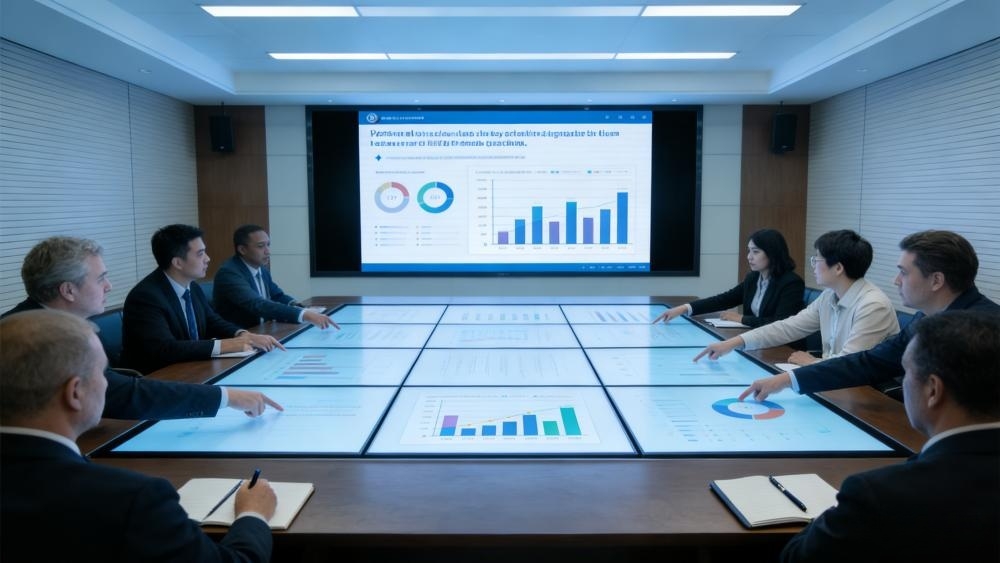
Indoor P1.2 full-color LED display screen for conference applications
Indoor Narrow Pixel Pitch LED Display Comparison: P1.2 to P3
Overview Comparison Table
| Model | Pixel Density | Best Viewing Distance | Key Features | Typical Applications | Cost Level |
|---|---|---|---|---|---|
| P1.2 | ~694,444 dots/㎡ | 1.5–3 m | Ultra HD, COB optional | Command centers, broadcast | Very High |
| P1.5 | ~444,444 dots/㎡ | 2–5 m | Balanced clarity & cost | High-end meeting rooms | High |
| P1.8 | ~308,642 dots/㎡ | 3–6 m | High ROI | Conference rooms | Medium-High |
| P2.0 | ~250,000 dots/㎡ | 4–7 m | Stable & economical | Training rooms | Medium |
| P2.5 | ~160,000 dots/㎡ | 5–10 m | Commercial standard | Retail, KTV | Low-Medium |
| P3 | ~111,111 dots/㎡ | 8 m+ | Long-distance viewing | Large halls | Low |
How to Choose the Right Indoor Narrow Pixel Pitch LED Display by Application
High-End Professional Environments (P1.2 / P1.5)
- Priority: image detail over cost
- Ultra-close viewing: choose P1.2
- Mid-distance viewing: choose P1.5
Business and Office Spaces (P1.8 / P2.0)
- Priority: ROI and practicality
- Standard meeting rooms: P1.8
- Budget-focused projects: P2.0
Commercial and Entertainment Venues (P2.5 / P3)
- Priority: visual impact and cost control
- Malls and KTV: P2.5
- Large halls with long viewing distance: P3
Installation Considerations for Indoor Narrow Pixel Pitch LED Display
Conference Rooms and Auditoriums
- Structural load assessment
- Low-noise cooling system
- Hidden cable management
Shopping Malls and Exhibition Halls
- Wide viewing angle coverage
- Ambient light evaluation
- Fireproof and impact-resistant materials
Entertainment Venues
- Enhanced ventilation
- Moisture protection
- Easy content control system
Frequently Asked Questions (FAQ)
Is smaller pixel pitch always better?
No. The optimal pixel pitch depends on viewing distance and application requirements.
Is higher brightness better for indoor LED displays?
No. Excessive brightness may cause eye fatigue in indoor environments.
What is the typical lifespan of an indoor LED display?
Indoor narrow pixel pitch LED displays typically offer up to 100,000 hours of lifespan.
COB or SMD – which should I choose?
COB offers higher reliability, while SMD provides better cost efficiency.
What additional equipment is required?
Controllers, video processors, power cabinets, steel structures, and high-quality cables.
Conclusion and Future Outlook
Choosing the right Indoor Narrow Pixel Pitch LED Display follows a clear logic:
Application defines viewing distance → Viewing distance determines pixel pitch → Budget finalizes the choice.
With emerging technologies such as Micro LED and advanced COB packaging, indoor LED displays will continue evolving toward higher reliability and broader applications.
Talk to Rigard LED Experts Today
Looking for a customized Indoor Narrow Pixel Pitch LED Display solution?
Contact Rigard LED with your room dimensions, viewing distance, budget range, and application scenario. Our engineering team will provide professional recommendations, layout design, and turnkey solutions.


