Technical Guide: Specifying the Perfect Stadium Perimeter LED Display Screen for Broadcast
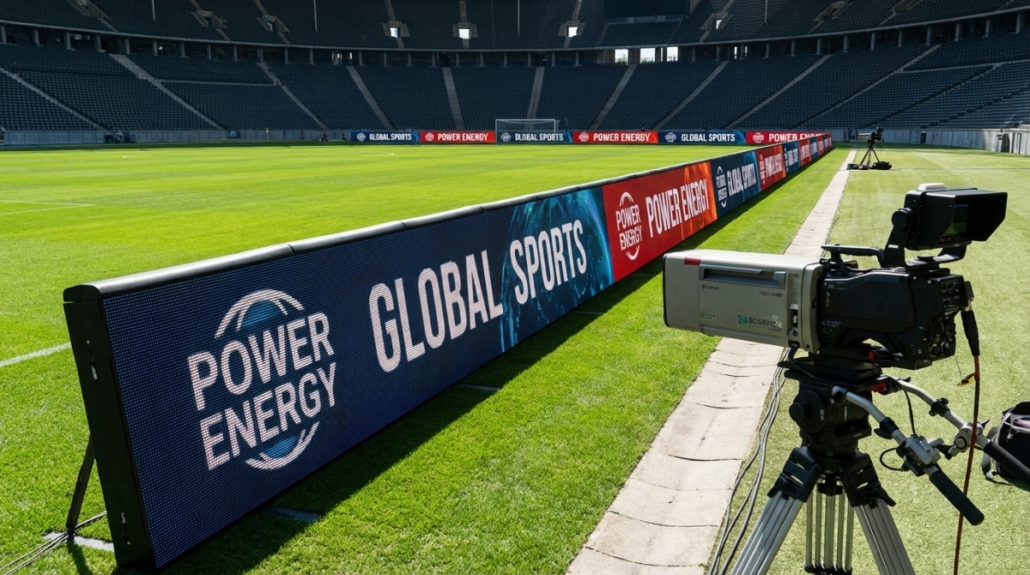
/Stadium Perimeter LED Display Screen systems have evolved from simple static advertising boards into mission‑critical digital broadcast assets. Today, they are not only revenue generators but also integral components of live television production, brand exposure, and fan engagement.
For stadium owners, engineering directors, and procurement teams, specifying the correct Stadium Perimeter LED Display Screen requires balancing multiple technical variables: resolution, brightness, durability, safety compliance, and broadcast performance.
This technical guide analyzes pixel pitch (P6–P10), brightness requirements (6000+ nits), refresh rates (3840Hz+), mechanical safety engineering, and installation best practices — ensuring your investment meets both ROI expectations and international broadcast standards.
The Role of the Stadium Perimeter LED Display Screen in Modern Sports
The perimeter LED display has transformed modern stadium economics. Instead of static printed boards, clubs now deploy dynamic digital systems capable of:
- Rotating sponsor advertisements in real time
- Targeted regional advertising for international broadcasts
- Interactive fan engagement content
- High-definition branding for 4K/8K television
However, the engineering challenge is significant: the screen must withstand direct sunlight, rain, impact from players and balls, while simultaneously delivering flicker‑free images for ultra‑slow‑motion replays.
Deep Dive: Selecting the Best Pixel Pitch for Stadium Perimeter Displays
Defining Pixel Pitch in a Sports Context
Pixel pitch refers to the distance between two adjacent LED pixels, measured in millimeters. In stadium applications, pixel pitch determines resolution and optimal viewing distance.
Formula:
Minimum Viewing Distance (mm) = Pixel Pitch × 1000
Example:
P10 → 10 × 1000 = 10,000mm = 10 meters
The “Camera vs. Human Eye” Conflict
The Human Eye
Fans in upper stands are typically 20–80 meters away. For them, P10 is visually sufficient.
The Broadcast Camera
Cameras zoom in. A high-definition lens magnifies pixel gaps and can cause Moiré patterns. Therefore, broadcast quality — not human eyesight — should drive specification decisions.
P10 vs. P8 vs. P6: Comparative Analysis
P10 LED Display (Industry Standard)
- Cost-effective
- Robust structure
- Ideal for large outdoor football stadiums
- Excellent for text and static logos
P8 LED Display (Balanced Choice)
- Sharper resolution
- Suitable for Full HD and 4K broadcasts
- Preferred by top-tier leagues (UEFA, FIFA competitions)
P6 LED Display (Premium Choice)
- High pixel density
- Optimized for close-up camera shots
- Best for indoor arenas or elite venues
Table 1: Pixel Pitch Selection Matrix for Stadiums
| Feature | P10 LED Display | P8 LED Display | P6 LED Display |
|---|---|---|---|
| Pixel Density | 10,000 dots/m² | 15,625 dots/m² | 27,777 dots/m² |
| Optimal Viewing Distance | ≥ 10 Meters | ≥ 8 Meters | ≥ 6 Meters |
| Broadcast Suitability | Standard HD | Full HD / 4K Ready | 4K / 8K Close-ups |
| Budget Impact | Low / Medium | Medium / High | High |
| Best Use Case | Large Outdoor Stadiums | Top-Tier Leagues | Premium Indoor Arenas |
Mastering Brightness: Visibility in Direct Sunlight
The Outdoor Challenge
Ambient sunlight can exceed 100,000 lux at noon. Without sufficient brightness, LED content becomes washed out.
The Nits Requirement for a Stadium Perimeter LED Display Screen
- 4,500–5,000 nits: Basic outdoor level (insufficient for direct sun)
- 6,000 nits: Minimum professional baseline
- 7,000–10,000 nits: Recommended for stadium-grade systems
A Stadium Perimeter LED Display Screen facing direct sunlight must maintain strong contrast ratios. Raw brightness alone is insufficient.
Contrast Ratio & Black SMD LEDs
High-quality SMD LEDs with black masking enhance perceived contrast. This ensures sponsor logos remain vivid even in high ambient light conditions.
Automatic Brightness Adjustment
Light sensors are mandatory.
Day games require 7,000+ nits. Night games require significant dimming to avoid blinding players or interfering with cameras.
Professional systems automatically adjust brightness based on environmental light levels.
Broadcast Integrity: Refresh Rates and Scan Modes
High Refresh Rate (3840Hz vs. 1920Hz)
Refresh rate determines flicker visibility on camera.
- 1920Hz → Risk of flicker in slow motion
- 3840Hz → Broadcast standard
- 7680Hz → Elite-level production
For super slow-motion replays, anything below 3840Hz can cause scanning lines.
Grayscale and Color Depth
Accurate grayscale processing ensures sponsor brand colors remain consistent even when brightness is reduced.
This is critical for contractual advertising compliance.
Mechanical Engineering: Safety and Durability
Player Safety (The #1 Priority)
A professional Stadium Perimeter LED Display Screen integrates:
- Soft rubber mask modules
- Top foam cushion
- Rounded structural edges
These absorb impact from players and football collisions.
Impact Resistance
Cabinet frames must withstand high-velocity ball strikes. Die-cast aluminum structures ensure rigidity without excessive weight.
IP Ratings (Ingress Protection)
- Minimum Front: IP65
- Minimum Rear: IP54
- Recommended: IP65/IP65 for heavy rain or snow
Rigard outdoor LED systems meet IP65/IP67 waterproof standards and are certified under TUV, EMC, CE, and RoHS.
Installation, Maintenance, and Emergency Protocols
Hot Swapping Capability
Live matches cannot stop due to pixel failure.
Professional perimeter systems allow module replacement while the screen remains operational.
Emergency Exit Gaps
FIFA and international standards require access gates for medical teams and evacuation routes.
Perimeter systems must be modular and movable.
Adjustable Support Legs (75°–90°)
Adjustable tilt ensures:
- Optimal camera capture
- Reduced glare
- Improved audience visibility
FAQ
Q1: What is the lifespan of a typical outdoor Stadium Perimeter LED Display Screen?
Approximately 100,000 hours under optimal conditions. However, lifespan depends on brightness usage patterns and thermal management.
Q2: Can perimeter screens be used for both outdoor football and indoor basketball?
Yes, if brightness is adjustable. However, pixel pitch should match the closer viewing distances in indoor arenas.
Q3: How does pixel pitch affect total power consumption?
Lower pixel pitch equals higher LED density, which increases potential power draw. Robust power distribution planning is essential.
Q4: What is the difference between DIP and SMD technology?
SMD provides better viewing angles, higher contrast, and smoother resolution. It has largely replaced traditional DIP in modern stadium applications.
Conclusion: Engineering the Right Balance
The best Stadium Perimeter LED Display Screen is not defined by one specification alone.
It is the balance between:
- Pixel Pitch (Viewing Distance & Broadcast Needs)
- Brightness (Environmental Conditions)
- Refresh Rate (Camera Performance)
- Mechanical Safety (Player Protection)
At Rigard LED, we combine broadcast-grade LED technology with strict quality control systems (IQC, IPQC, QC, QA) and international certifications to deliver stadium LED display solutions for global sports arenas.
Request a Professional Engineering Consultation
Planning a new stadium project or upgrading your existing perimeter advertising system?
Contact Rigard LED today for a custom CAD layout and technical shoot-out test.
- Factory-direct manufacturing
- IP65/IP67 waterproof outdoor LED displays
- 3840Hz+ broadcast refresh rate
- Anti-collision safety design
- Global project experience
Email: info@rigardled.com
Phone/WhatsApp: +86 199 2518 9799
Website: https://rigardled.com/
Upgrade your stadium to broadcast-ready digital performance today.