LED virtual production

How Does LED Virtual Production Work?

in /by

With the advancement of film shooting technology and LED display technology, especially with the popularity of the concept of the metaverse, film shooting technology is undergoing a new revolution. LED virtual production is now one of the most advanced film technologies, gradually replacing practical shooting and green screens

.

LED virtual production

Recently, the highly acclaimed film Barbie, which focuses on a female perspective, has gained global attention thanks to LED virtual production. The special effects production team of Barbie completed the scene of a convertible car driving in Barbie Park using the V Stage virtual production studio located in Leavesden, England, owned by Warner Bros. As one of the largest virtual production studios in Europe, V Stage consists of over 2,600 LED panels and integrates state-of-the-art image and sound processing systems.

Virtual production allows LED display screens to have great potential in film virtual production. So how does LED virtual production work? Let’s first delve into the understanding of virtual production.

What is Virtual Production?

Virtual production refers to the use of computer-generated imagery (CGI) and real-time technology to create and capture visual effects and scenes in a virtual environment. It combines live-action footage with virtual elements, allowing filmmakers to see virtual scenes, characters, and effects in real time and interact with them during the production process.

Virtual production techniques include projecting virtual backgrounds or environments onto physical sets using green screens or LED walls, using motion capture technology to record actors’ movements and apply them to virtual characters, and utilizing real-time rendering engines to generate high-quality visual effects instantly.

Both green screens and LED displays are tools used to create virtual high-resolution videos. The main difference between them is that green screens require post-production work, where various tools are used to remove the green portion and replace it with the desired virtual image, while virtual production LED walls only require the projection of images onto the screen.

LED display screens


  • Green screen shooting


Green screen shooting used to be one of the most advanced film technologies. In green screen film production, actors and crew members have to imagine what the final shot will look like. It can be challenging to envision the final shot, especially for productions heavily reliant on green screens. This makes set design and lighting more difficult, as the cinematographer must consider the composite effect.


  • Virtual production LED walls


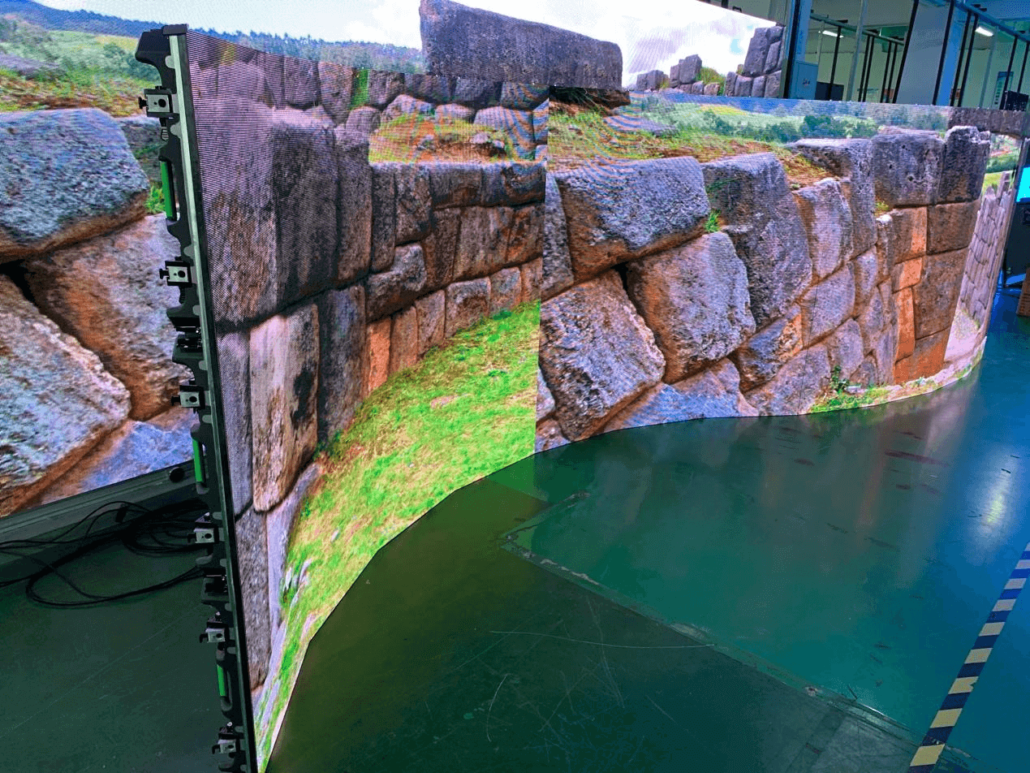
In comparison to green screens, virtual production LED walls have many advantages and are a popular form of virtual production. Virtual production LED walls, also known as LED video walls or LED display walls, are large arrays of LED panels used for virtual production. They serve as the background or environment for shooting and displaying high-resolution virtual content in real-time. LED walls used in virtual production are typically composed of modular LED panels that can be seamlessly connected to create larger display areas. These panels consist of numerous small LED bulbs that emit light and color, forming the images or videos displayed on the wall.

How Does LED Virtual Production Work?

LED virtual production involves using LED screens or walls as the backdrop for filming, placing actors or objects in front of the LED screen, and projecting dynamic and interactive virtual content to complete the movie shoot.

Instead of using traditional green screens or physical setups, LED panels display high-resolution virtual backgrounds or environments in real time. These LED walls can be programmed to display realistic 3D worlds, often using Unreal Engine. With the use of an engine called “Nanite”, images can be imported into the 3D environment, creating a close-to-reality 3D backdrop. The content displayed on the LED screen is typically generated by real-time rendering engines, allowing filmmakers to see the final composition on set during the filming process.

Advantages of LED Virtual Production

  1. Real-time visualization and enhanced realism

One of the advantages of LED virtual production is that it provides actors with a more immersive and realistic environment as they can see the virtual world they are interacting with in real time. This instant feedback helps actors deliver more authentic performances and allows directors to make on-the-spot adjustments, resulting in a more efficient and collaborative production process.

  1. Cost and time savings

Virtual production LED walls can significantly reduce the need for extensive post-production work, as not only can the shooting scenes be generated entirely in the LED virtual studio, but also the scenes can be switched freely within the studio. The entire shooting process can be done without any outdoor locations, as environments such as deserts, forests, oceans, etc., can all be created within the LED virtual production studio. This greatly enhances shooting efficiency, eliminating the need for extensive post-production work to add visual effects or backgrounds, and reducing post-production time and film production costs.

LED virtual production

  1. Improved lighting and reflections

Furthermore, the use of LED screens can provide actors with realistic lighting and reflections, further enhancing the integration of virtual and real elements. The virtual production LED walls emit light that interacts with the actors and objects in the scene. This creates realistic lighting and reflections, enhancing the integration of virtual and real elements. It also reduces the need for extensive lighting setups, as the virtual environment can provide the desired lighting conditions.

  1. Enhanced creativity and flexibility

Virtual production LED walls offer filmmakers greater creative control over virtual environments. They can make instant changes to virtual backgrounds or sets, experiment with different lighting conditions, and visualize complex scenes or visual effects in real time. This flexibility allows for more experimentation and creative exploration during the production process.

  1. Seamless camera tracking

Virtual production LED walls can also integrate with camera tracking systems, allowing virtual content to dynamically respond to the camera’s movements. This enables realistic parallax and perspective changes, enhancing the sense of depth and immersion in the virtual environment.

LED Virtual Production

The Future of LED Virtual Production

In recent years, LED virtual production has become increasingly popular. The large LED screens that surround the entire set provide filmmakers with more control and flexibility to create visually stunning seamless scenes. LED virtual production technology was first used in the production of the TV series The Mandalorian. More than 50% of the first season of The Mandalorian was shot using virtual production LED walls. LED virtual production provided The Mandalorian with impressive visual effects, earning it the Visual Effects Society Award for “Outstanding Model in a Photoreal or Animated Project”.

The Mandalorian revolutionized the traditional filmmaking process by utilizing LED virtual production techniques and taking virtual production to new heights. Although XR virtual production is still in its early stages, the concept of the metaverse has greatly influenced its development, and there is enormous potential for the future of LED virtual production. Not only in the film and television industry, but also in the gaming, visual effects, and large-scale advertising industries, leading companies have started investing in large LED virtual production studios, which will drive the demand for LED displays. 

In the long run, LED virtual production is a significant transformation in the film industry with vast prospects, and its future will continue to expand as costs decrease and demand increases.

RIGARD Narrow Pixel LED Display

The RIGARD Narrow Pixel LED Display is a product in the industry that meets all the requirements of virtual production for creating realistic worlds in terms of display color, stability, and on-camera performance. It features a perfect 16:9 screen ratio, providing high-resolution video in LED walls for virtual production. Some popular screen formats such as 4:3 and 16:9 is easily accessible on the RIGARD Narrow Pixel LED Displays. Additionally, compared to green screens, RIGARD LED delivers high-quality video production even in low brightness and eliminates the need for carrying cables around. If you’re looking for a cinema-grade giant screen for virtual production, the outstanding performance of the RIGARD Narrow Pixel LED Displays can help you create more standout works.

Small Pixel Pitch LED Displays

11 Moisture-proof Tips for Small Pixel Pitch LED Displays

in /by

With the popularity of small pixel pitch LED displays, their daily operation and maintenance need to be given more attention, as this not only ensures work efficiency but also extends their lifespan.

LED display screens are electronic devices that are extremely sensitive to moisture and are more prone to damage due to humidity in daily use. Therefore, keeping fine pixel pitch LED screens from humidity is an important part of LED screen maintenance.

Why Should You Keep Small Pixel Pitch LED Displays from Humidity?

Dehumidification and moisture prevention for LED displays refer to preventing water vapor from entering the internal components of the LED screens and preventing the LED screens from operating in a humid environment.

  1. Prevent Condensation

The components of LED display screens are mainly encapsulated with plastic materials such as epoxy resin, which are polymer materials with large gaps between molecules. Therefore, gaseous water molecules can penetrate the LED casing and infiltrate the moisture-sensitive components through these gaps. When the indoor humidity level is high, condensation water can form on the LED screens, causing water stains and moisture to penetrate the internal casing, resulting in screen malfunctions. Keeping small pixel-pitch LED displays helps prevent condensation.

  1. Maintain Image Quality

Operating LED displays in high-humidity environments can affect the image quality, resulting in pixel blur or distortion, reducing overall clarity and sharpness. By dehumidifying and maintaining the LED display screen, the expected image quality can be maintained, ensuring that viewers can fully appreciate the high-resolution visual effects.

  1. Extend Lifespan

Moisture is one of the common causes of small pitch LED screen failures. When halogen-containing water vapor infiltrates the internal components of the LED display, the halogens can undergo electrochemical reactions with the metals inside the device when powered on, causing leakage, short circuits, corrosion, and other damage. Dehumidifying and maintaining the LED screens helps prevent these issues, prolonging the lifespan of the screens and reducing costly repair or replacement expenses.

  1. Reduce Downtime

If the small pitch LED display is damaged due to moisture, it may require repairs or replacement, resulting in downtime. This is particularly problematic for businesses that rely on LED displays for advertising, information dissemination, or entertainment. Regular maintenance and dehumidification of the LED screens can minimize the risk of downtime and ensure uninterrupted operation. Over time, this can save costs and achieve a higher return on investment.

Anyway, protecting fine pixel pitch LED displays from humidity is crucial for maintaining image quality, extending display lifespan, reducing downtime, and maximizing return on investment.

Small Pixel Pitch LED Displays

11 Tips for Protecting Small Pixel Pitch LED Displays from Humidity

Transportation and Storage of LED Components

  1. When transporting and storing LED components, take precautions to prevent water from coming into direct contact with the LED display screen, which may include padding them with objects or isolating them with waterproof materials.
  2. The storage environment for LED components is equally important. Invest in a humidity monitor to regularly track the humidity levels in the room. Ideally, humidity should be maintained between 40-60%. The optimal storage environment for fine pixel pitch LED displays is: temperature <30°C, humidity <60% RH. In addition, it is necessary to check daily if the environmental temperature meets the working conditions.
  3. During the transportation and storage of LED screens and their components, desiccants can be added to absorb moisture in the air.

Small Pixel Pitch LED Displays

Packaging of LED Components

  1. Vacuum packaging or sealing of LED modules, HUBs, receiver cards, and other components and placing desiccants inside the packaging.
  2. Consider using a professional LED display manufacturer for packaging and installation, as they are experts in this field and can provide you with the perfect solution for small pixel pitch LED displays.

RIGARD is an expert in narrow pixel pitch LED displays and takes pride in our indoor and outdoor LED displays with an IP65 protection rating and excellent waterproof and dustproof design. RIGARD has developed comprehensive moisture-proof solutions in the stages of production, transportation, and installation, ensuring that the LED screens can continuously provide captivating visual experiences, making them the ideal choice for advertisers and event organizers.

Packaging of LED Components

Dehumidification of LED Displays in Use

  1. After the installation of the narrow pixel pitch LED display, it should be regularly powered on and used. It is recommended to use the LED screen and its supporting equipment at least twice a week for 2 hours each time.
  2. If the LED display is not used for a long time (usually 5-10 days), it should be dehumidified before use. Gradually increasing the brightness and slowly warming up the screen will help remove accumulated moisture inside the display.
  3. Consider applying a waterproof coating or sealant on the LED screen to provide additional moisture protection. This can help prevent water stains and extend the lifespan of the LED display. However, be cautious when using disinfectants containing chlorine and bromine directly on the LED display screen, as they may cause corrosion to the screen and LED chips.
  4. Regularly clean the LED screens to remove any accumulated dust or debris, which will help prevent moisture buildup and potential damage.

Indoor Dehumidification

  1. Achieve physical dehumidification by placing a specific amount of desiccants indoors to absorb moisture from the air.
  2. Ensure to open windows for ventilation when the weather is clear to accelerate the evaporation of indoor water vapor, thereby reducing the relative humidity of the indoor environment. Also, make sure that the LED display screen is installed in a well-ventilated area, which will help prevent moisture accumulation in the surrounding environment of the screen.
  3. During humid and rainy seasons, air conditioning and dedicated dehumidifiers can be used to dehumidify the LED display and the indoor area, preventing the formation of condensation on the screen.Indoor DehumidificationWith the maturity and widespread application of high-definition display technology, small pixel pitch LED displays are gradually replacing DLP, LCD splicing, and projectors. They are widely used in commercial display scenarios such as conference rooms, education, shopping malls, and cinemas. To maximize your return on investment and ensure the best display quality, it‘s critical to follow these tips to protect small pixel pitch LED displays from moisture.
A Course in Italy

RIGARD Stadium LED Screens Make Their Debut at the DRV PNK Stadium

in /by

On July 21, in the opening match of the Major League Soccer group stage, Lionel Messi scored a free kick in the 94th minute, delivering a 2-1 win over Liga MX and making a successful debut with the Miami International team.

Stadium LED Screens

The soccer superstar, whose contract with Paris Saint-Germain expired in June 2023, joined Miami International founded by David Beckham in July! On July 21, Messi created a historic moment at the DRV PNK Stadium, thrilling the entire crowd of fans and spectators. This brilliant goal was broadcast to fans worldwide through the stadium LED screens and perimeter LED displays at the DRV PNK Stadium.

Stadium LED Screens

Stadium LED screens are the primary means for fans to access live match updates and interact with the game, as well as an important platform for international companies to showcase their image in sports venues. These LED display screens are usually located in prominent positions within the stadiums, such as above the playing field or on the walls of the stadium. With advancements in display technology and stadium infrastructure, stadium LED screens and display control systems have become the main display solutions for many international sports venues.

RIGARD has installed over 200 square meters of stadium perimeter LED screens and over 300 square meters of main screens at the DRV PNK Stadium, ensuring that live match updates and broadcasts reach the on-site audience and global fans in real-time, and no crucial moments are missed by spectators.

LED Scoreboards

The main screens in stadiums are often used as LED scoreboards. LED scoreboards are typically made up of multiple small LED panels and are used to display information such as remaining game time, scores of both teams, replays, and highlights. At the DRV PNK Stadium, there is one RIGARD LED scoreboard installed in front and one at the back. The spectacular moment when Messi played against Liga MX side Cruz Azul, was recorded and replayed in real-time on these two RIGARD LED scoreboards. LED scoreboards

LED scoreboards are a type of stadium LED screen, known for their self-illumination, high brightness, wide viewing angles, and high definition. They allow spectators to easily view scores and game information from a distance, even in bright sunlight or dim lighting conditions. To ensure that spectators from any position do not miss any exciting moments of the live broadcast, the LED scoreboard can display the entire image or divide it into different windows. Additionally, with wide viewing angles, high contrast, high refresh rates, and high color reproduction, LED scoreboards can connect to a central control system for real-time updates of scores and game information. This ensures that spectators always receive the latest information during the game, attracting potential sponsors.

Perimeter LED Displays

The LED screens surrounding the stadium are called perimeter LED display screens and are primarily used to play highlights of the game and show commercial advertisements. At the DRV PNK Stadium, nearly 200 square meters of RIGARD perimeter LED displays are in use, dynamically showcasing sponsor advertisements and key game information.

Perimeter LED Displays

The stadium perimeter LED screens provide high-resolution visual effects, ensuring that advertisements are clear, vivid, and easily readable from a distance. Equipped with adjustable rear brackets, the perimeter LED screens can be tilted at any angle to ensure that spectators in all corners of the stadium can have a clear view of the game. The perimeter LED displays can also accommodate multiple advertisers through rotating advertisements, providing an important source of revenue for the sports venue. Considering the powerful impact during the game, the perimeter LED display screens must have the ability to withstand shocks, vibrations, and cuts.

Stadium LED screens have changed the way we experience live events. With their impressive size, vibrant colors, and high resolution, these screens have become an integral part of modern sports venues. They provide audiences with an immersive and engaging experience, bringing them closer to the action and enhancing the overall atmosphere.

As a leading player in the LED display field, RIGARD is committed to producing every stadium LED screen with the highest requirements and standards, adding another layer of excitement and engagement for organizers and on-site spectators. RIGARD stadium LED display screens feature high brightness, high resolution, high protection, wide viewing angles, efficient energy-saving, and dual-channel heat dissipation, giving them a strong competitive advantage in the sports display market. They have been applied in top sports events such as UEFA, NBA, and the FIFA World Cup, meeting the display needs of indoor and outdoor sports event scenarios.

Check More Great Projects of RIGARD Stadium LED Screens

Maracanã Stadium, Brazil OlympicsMaracanã Stadium, Brazil Olympics

A Course in LondonA Course in London

A Course in ItalyA Course in Italy

Cricket League in England

Cricket League in England

Ontario Bowling Alley, Canada

Ontario Bowling Alley, Canada

Horse Race Track, Ireland

Horse Race Track, Ireland

MSG Sphere: The World’s Largest Spherical LED Display

in /by

Innovation is key when it comes to attracting audiences and creating unforgettable visual experiences in both the entertainment and display industries. Madison Square Garden Company (MSG) has always been at the forefront of pushing boundaries, and their latest project, MSG Sphere, is no exception. As the world’s largest spherical LED display, MSG Sphere further innovates indoor and outdoor LED display technology, completely transforming the way we experience live events.

MSG Sphere in Las Vagas

What is MSG Sphere?

MSG Sphere is a spherical entertainment venue conceived and built by Madison Square Garden Company, located in Las Vegas. Known for the largest spherical architecture, largest spherical LED display screen, and highest resolution in the world, MSG Sphere aims to provide an immersive visual feast for every audience member, regardless of their proximity to the stage.

When discussing the differences between MSG Sphere and other venues, U2’s Bono stated, “Most music venues happen in sports arenas. They are built for sport, not art. And this building is built for immersive cinema and immersive performance.” MSG Sphere will also serve as a multipurpose venue for various events, including concerts, sports games, speeches, and other entertainment performances.

the world’s largest spherical LED display - MSG Sphere

Innovations of MSG Sphere


  1. The world’s largest spherical LED display 

The exterior of MSG Sphere consists of 1.2 million LED panels, each the size of an ice hockey puck, forming a 54,000 square meter spherical LED display screen. This allows for large-scale showcasing of both static and dynamic images through programming, providing unique performances for those who cannot enter MSG Sphere. Inside MSG Sphere, a 160,000 square foot 16K LED screen has been constructed. The massive LED sphere screen, stretching from the ground to 250 feet high, surrounds the audience, immersing them in a colorful and dynamic visual world.

  1. Ultra-high-definition display 

The spherical LED display of MSG Sphere goes beyond the technology of high-definition display, achieving the world’s highest resolution of 19,000 x 13,500 pixels. This resolution is 100 times higher than today’s high-definition televisions, ensuring that audiences can clearly see every frame from different angles and distances. Furthermore, the LED sphere screen can provide an immersive viewing experience through psychedelic animations and close-up shots of performers on the 360 JumboTron.

  1. The elevated audio experience surrounding 

MSG Sphere has over 164,000 speakers that deliver the same pristine sound to every seat, whether they are in the front row or on the floor. The sound system utilizes various technologies, including beamforming, to direct the audio to specific locations in the audience, maintaining a constant volume from the source to the destination. This means that the audience will hear sound coming from the exact location of the sound source, increasing the possibilities for truly customized experiences and haptic feedback systems.

  1. 4D experience 

The MSG Sphere venue is also equipped with tactile seats that can vibrate according to any occurrences on the spherical LED display screen, such as earthquakes, and can provide wind, temperature, and even scent for a 4D experience. With high-resolution imagery and video presentation, coupled with the 4D experience, MSG Sphere aims to create a virtual reality-like experience for the audience.

Technical Requirements for Spherical LED Displays

Spherical LED displays like MSG Sphere bring forth innovative and exciting concepts, but they also present various technical requirements and challenges that need to be addressed to ensure successful implementation. Here, we will explore spherical LED display solutions related to construction and operation.

construction of spherical LED displays

  • Structural Engineering 

Building such a massive spherical LED display requires precise structural engineering. The steel structure must be able to support the weight of the spherical LED panels, withstand external forces like wind and earthquakes, and ensure the safety of the audience inside.

During the construction of the MSG Sphere, an 86-meter temporary support tower was built in the center of the venue to erect a 154-ton compression ring on top of 32 trusses. The team also transported the world’s fourth-largest crawler from Belgium to position some of the largest and heaviest components.

  • Design and manufacturing of LED panels 

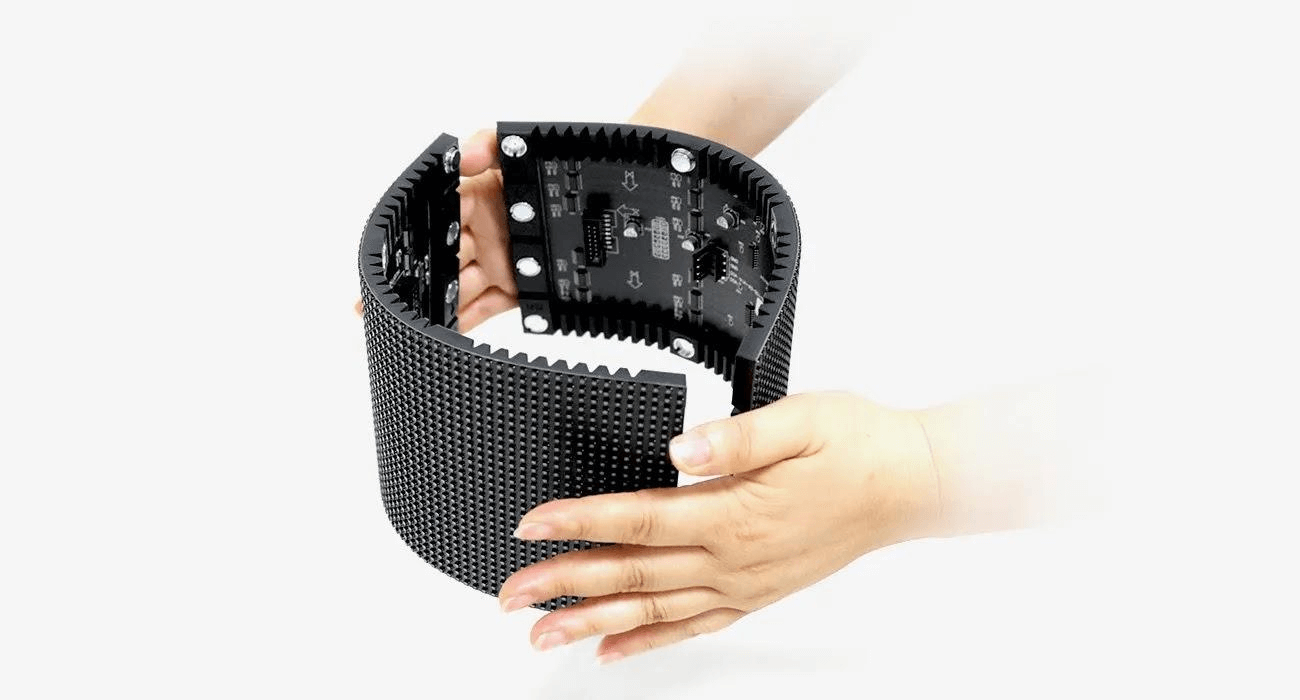
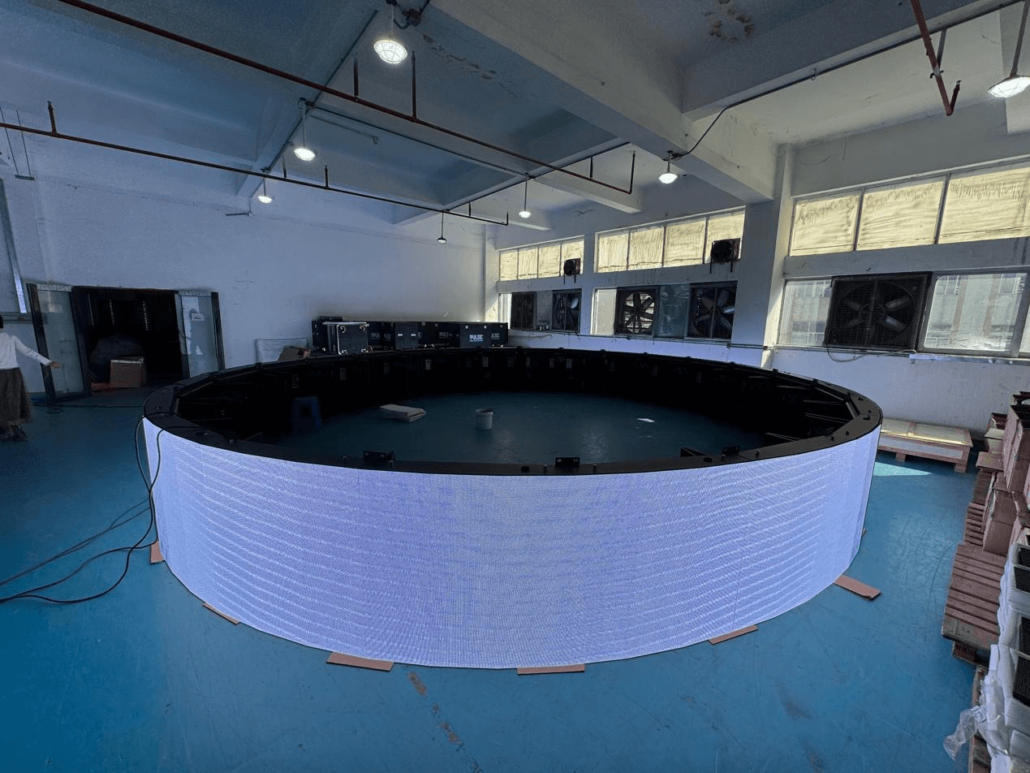
Creating LED panels that seamlessly cover the spherical surface is a complex task. LED sphere screens require flexible LED panels with sufficient flexibility to adapt to the curved shape without distorting the image while maintaining consistent brightness and color across the entire surface. The manufacturing process must also ensure the durability and lifespan of the flexible LED panels as they will be exposed to various environmental conditions.

  • Image calibration and mapping 

Achieving a seamless visual experience on a spherical LED display requires precise image calibration and mapping. Each LED panel needs to be calibrated to display the correct color and brightness levels, ensuring a uniform appearance across the entire surface. Additionally, content creators must consider any deformations caused by the spherical surface and accurately map the visuals to adapt to the curved shape.

spherical LED displays

  • Content creation and adaptation

Creating content for a spherical LED display is a unique challenge. Traditional flat-screen content may need to be adjusted or redesigned to fit the curved surface and take advantage of the immersive environment. Content creators must also consider the viewing angles and perspectives of the audience to ensure visually engaging experiences from any position within the venue.

  • Processing power and data management

Spherical LED displays require powerful processing capabilities and data management due to their size and resolution requirements. The LED panels need to receive and process a large amount of data in real time to display high-resolution images and videos. This requires robust hardware and software solutions to efficiently process and distribute content to the LED panels.

  • Heat dissipation and cooling

LED panels generate heat during operation, and heat dissipation is a critical concern for spherical LED displays. The large surface area of the display and the proximity of the LED panels can result in a significant accumulation of heat. Effective cooling systems must be in place to prevent overheating, as it can affect the performance and lifespan of the LED sphere screens.

  • Power supply and energy efficiency

Operating a spherical LED display requires a substantial amount of power. Ensuring a reliable and efficient power supply is crucial to avoid any interruptions during events. Additionally, considering the environmental impact of energy consumption, designing energy-efficient LED display screens is essential to minimize carbon footprints.

  • Maintenance and repairs

Due to the size and complexity of a spherical LED display, its maintenance and repairs can be challenging. Opting for flexible LED modular during construction can improve maintenance efficiency and reduce costs. To keep the LED sphere screen in optimal condition, a strict schedule for regular maintenance must be implemented, and trained technicians should be available on-site.

the world’s largest spherical LED display - MSG Sphere

Conclusion

MSG Sphere represents a new era of live entertainment, where technology and creativity come together to create unforgettable experiences. The world’s largest spherical LED display will take audiences into a new dimension, blurring the boundaries between reality and virtual reality. However, new and complex technological requirements and challenges are present throughout the entire construction process of a spherical LED display, including structural engineering, LED panel design and manufacturing, content creation and mapping, and more. In this case, a company with extensive experience in LED display projects would be what you are looking for.

RIGARD is a leading high-tech enterprise with rich experience in LED panel design and manufacturing. Since its establishment, we have been at the forefront of pushing the limits of LED display technology. Empowered by innovative display technology, RIGARD has successfully reduced the pixel pitch of LED screens to below P1.0, providing your audience with ultra-high-definition image and content display. With our success in LED panel design and manufacturing, RIGARD has successfully served numerous renowned LED display projects worldwide. 

Our perfect LED display solutions will accompany every LED display project. If you also want to bring immersive viewing experiences to your audience through the construction of a spherical LED display, RIGARD is ready to stand by your side.

outdoor LED display screens

How to Deal with Extreme Weather for Outdoor LED Screens?

in /by

Outdoor LED screens have become increasingly popular in recent years, thanks to their ability to captivate audiences and deliver dynamic content. However, one common concern among potential buyers is how outdoor LED screens cope with extreme weather conditions. 

In this article, we will explore the durability and resilience of outdoor LED display screens in the face of harsh weather, and how they are designed to withstand various environmental challenges.

outdoor LED display screens

Solutions for the Potential Hazards that Outdoor LED Screens May Face in Extreme Weather

While outdoor LED screens are designed to withstand extreme weather conditions, they are not entirely immune to potential hazards. Understanding and addressing these risks through proper installation, regular LED screen maintenance, and appropriate protective measures can help ensure resilience and longevity. 

  1. Water Damage

Heavy rain, snowfall, or even high humidity levels can pose a risk of water damage to outdoor LED screens. If water seeps into the screen’s internal components, it can cause short circuits, corrosion, or malfunctioning. 

➤ Solution:

Proper waterproofing measures, including sealed enclosures, reinforced connectors, and gaskets, are crucial to prevent water penetration.

Outdoor LED display screens should adopt a waterproof box-type construction with better sealing for that a full set of waterproof equipment are included, such as the water barrier on the top and bottom, and a waterproof backshell behind the LED modules, which can guarantee the normal operation of the outdoor LED screens. Nonetheless, the back of the LED modules should be painted with tri-proof paint, which can repel water and prevent it from affecting the display quality.

In addition, waterproof tests are required before the outdoor LED displays are shipped to ensure that the protection level should reach IP65. IP rating is one of the key factors that contribute to the resilience of outdoor LED screens, indicating the degree of protection against dust and water. For outdoor LED display screens, an IP65 or higher rating is critical to ensure their survival in extreme weather conditions, which means they are completely impervious to dust and can withstand low-pressure water jets from any direction.

outdoot LED screens

Most importantly, outdoor LED screen maintenance is especially important during rainy seasons. Regularly cleaning the dust attached to the inside and outside of the outdoor LED display can significantly improve the heat dissipation efficiency while also reducing the adhesion of water vapor. Second, run the LED screen often to ensure more than 2 hours of normal work per day. When the ambient humidity is higher than 90% RH, use air conditioning or fans to dehumidify the outdoor LED display screens. Do not forget to regularly check whether there is dew, frost and other conditions inside the screen.

  1. Wind and Storm Damage

Strong winds, gusts, and storms can exert significant pressure on outdoor LED screens, potentially leading to structural damage or detachment. 

➤ Solution:

To mitigate this risk, outdoor LED displays should be mounted with stable and sturdy steel frame structure to provide stability and resistance against strong gusts. In addition, impact-resistant materials, including tempered glass or polycarbonate protective layers can shield the LED modules from wind and storm damage. Advanced mounting systems and shock-absorbing structures minimize the impact of vibrations caused by external factors such as heavy traffic or nearby construction. Maintaining LED screens in these manners ensures that the installed outdoor LED displays have higher vibration and wind resistance.

outdoor LED screen maintenance

  1. Extreme Temperatures 

Extreme temperatures, whether hot or cold, can affect the performance and lifespan of outdoor LED screens. In fact, the appropriate temperature for outdoor LED displays should be -20° to 65°. High temperatures lead to overheating, chip damage, reduced brightness, luminous efficiency loss, producing significant light decay. Besides, the packaging material of the light will also make the thermal expansion coefficient rise abruptly due to high temperature, which leads to screen failure. Freezing temperature can cause outdoor LED screens to freezing or damage to internal components.

➤ Solution:

Outdoor LED screens incorporate temperature regulation systems to prevent overheating or freezing. These systems include integrated cooling fans, heat sinks, and thermostats that monitor and adjust the internal temperature accordingly. Regular LED screen maintenance through the temperature regulation system ensures the screens can operate efficiently in both scorching summer heat and freezing winter cold.

To protect against extreme heat, outdoor LED display screens incorporate efficient cooling systems. These systems prevent overheating by dissipating heat generated by the display components. Additionally, the screens are designed with ventilation features that allow for proper airflow, ensuring optimal performance even in scorching temperatures. Where conditions permit, LED display screens up to 20 square meters can be equipped with two exhaust fans with a diameter of about 300mm to dissipate heat. Over 20 square meters of LED displays, can be equipped with exhaust fans or air conditioning according to the size.

In freezing conditions, outdoor LED screens are equipped with heating elements that prevent moisture buildup and ice formation. This feature ensures that the screens remain functional and free from any damage caused by freezing temperatures.

  1. Sunlight Glare

Direct sunlight can create glare on outdoor LED screens, potentially affecting visibility and readability. Prolonged exposure to the sun also tends to cause corrosion and aging of the screens.

➤ Solution:

One of the challenges faced by outdoor LED screens is maintaining visibility in bright sunlight. However, modern LED technology has addressed this issue by incorporating high-brightness LED modules and automatic brightness adjustment mechanisms. High-brightness LED modules are now used in outdoor screens, allowing for excellent visibility even in direct sunlight. They even utilize automatic brightness adjustment mechanisms to adapt to changing lighting conditions, ensuring optimal visibility at all times.

  1. Hail and Debris Impact

Hailstorms or flying debris during extreme weather events can cause physical damage to outdoor LED screens. What’s worse, outdoor environments can be harsh, with the potential for accidental impacts or vibrations. 

➤ Solution:

LED display screens consist of a mask, circuit board, and bottom case, where the mask and bottom case should be built with impact-resistant materials, such as tempered glass or polycarbonate layers, to protect the LED modules from damage. Additionally, advanced mounting systems and shock-absorbing structures minimize the impact of vibrations caused by external factors such as hail and debris. Anyway, regular LED screen maintenance and prompt repairs are essential to address any impacts or cracks that may affect the outdoor LED screen’s performance.

  1. Electrical Surges

Thunderstorms or power fluctuations during extreme weather can result in electrical surges, which may damage the electronic components of outdoor LED screens, and even cause fires. 

➤ Solution:

Installing surge protectors and proper grounding systems can help safeguard the outdoor LED display screens against such electrical hazards.

RIGARD outdoor LED screen

Conclusion

Outdoor LED screens have revolutionized the advertising and entertainment industry, providing viewers with a captivating visual experience in a variety of outdoor environments. As an industry-leading LED display manufacturer, RIGARD has proven the resilience and adaptability of RIGARD outdoor LED screens in dealing with extreme weather conditions.


With IP65 rating, rugged construction, enhanced visibility in bright sunlight, temperature regulation system, waterproof and dustproof design, impact resistance and remote monitoring capabilities, RIGARD outdoor LED display screens are highly reliable and durable in outdoor environments. Whether it’s hot, cold, rainy or windy, our outdoor LED screens continue to provide a captivating visual experience, making them ideal for advertisers and event organizers.


poster led display

How LED Poster Displays Improve Your Advertising Effectiveness?

in /by

In the digital age, businesses are continually seeking innovative ways to capture the attention of potential customers. One such method that has gained significant popularity is the use of LED poster displays. But what exactly is a LED poster display, and how can it improve your advertising effectiveness? This article aims to shed light on these questions.

What is a LED Poster Display?

A LED poster display, also known as a LED poster screen or digital LED poster, is a freestanding, portable, and high-definition digital screen that uses Light Emitting Diodes (LEDs) to display vibrant, dynamic content. Unlike traditional posters, poster LED displays are capable of showcasing moving images, videos, and interactive content, making them a powerful tool for advertising and communication.

LED poster display in a retail store

Enhancing Advertising Effectiveness with LED Poster Displays

LED poster displays have revolutionized the advertising industry by offering a visually captivating and impactful way to engage with consumers. Their attention-grabbing visuals, versatility, and cost-effectiveness make them an ideal choice for you to enhance your advertising effectiveness.

  1. Capturing attention

In today’s fast-paced society, capturing the attention of potential customers has become increasingly challenging. Poster LED displays offer a unique solution by providing vibrant and eye-catching visuals that stand out in any environment. With their bright colors, high resolution, and dynamic content, poster displays ensure your advertising message is effectively communicated, making them more attractive and engaging than static posters. 

  1. Increased brand recall

The dynamic nature of LED poster displays allows you to showcase your products or services in an interactive and visually appealing manner. By incorporating animations, videos, and scrolling text, you can create captivating and memorable experiences for your audience. This ability to create engaging content ensures that your message is not only seen but also retained by viewers, leading to increased brand recall and ultimately higher conversion rates.

  1. Inspiring action

Interactive  LED poster displays can engage customers in unique ways, such as touch-screen interfaces or QR code scanning, encouraging customer interaction and immediate action.

poster LED displays

  1. Versatility and flexibility

LED poster displays are highly versatile and can be used in various settings, making them suitable for a wide range of businesses and industries. Whether it’s a retail store, a restaurant, a trade show, or even an outdoor event, poster displays can be easily integrated into any environment to deliver your message effectively.

Unlike traditional static posters, LED poster displays offer the flexibility to update and change content effortlessly. This allows you to adapt your advertising campaigns in real time, promoting special offers, new products, or upcoming events. With the ability to schedule content changes remotely, you can ensure that your advertising is always relevant and up to date, maximizing its impact.

Furthermore, Poster LED  displays can be customized to fit any size or shape, making them ideal for unconventional advertising spaces. Whether it’s a large billboard on a busy street or a smaller display in a shopping mall, poster displays can be tailored to suit your specific requirements, ensuring maximum visibility and impact.

  1. Cost-Effectiveness

While the initial investment in LED poster displays may seem significant, their long-term cost-effectiveness makes them a worthwhile investment for businesses of all sizes. Unlike traditional print media, which requires frequent reprinting and distribution costs, poster LED displays eliminate the need for physical materials, reducing ongoing expenses.

Additionally, the ability to update content remotely eliminates the need for manual labor and reduces the time and effort required to change advertisements. This not only saves costs but also allows you to allocate resources more efficiently, focusing on other critical aspects of marketing strategy.

Moreover, LED poster displays have a longer lifespan compared to traditional advertising methods, reducing the need for frequent replacements. With advancements in LED technology, poster displays are highly durable and energy-efficient, resulting in lower maintenance and operational costs over time.

LED poster displays

Application Scenarios of LED Poster Displays

Built to last, poster displays are resistant to weather and wear, making them versatile and can be used in a variety of settings, including:

  1. Retail Stores: LED poster displays can be used to showcase product features, promotional offers, or brand stories, enhancing in-store customer experience and driving sales.
  2. Events and Exhibitions: LED poster displays serve as digital signage, providing event information, wayfinding, or showcasing sponsors and exhibitors.
  3. Restaurants and Hotels: LED poster displays can display menu items, special deals, or guest information, enhancing customer service and satisfaction.
  4. Corporate Communications: LED poster displays can be used in offices or corporate buildings to display company news, announcements, or motivational messages, fostering a positive work environment.

RIGARD LED Poster Displays

LED poster displays are a powerful advertising tool that offers high visibility, flexibility, energy efficiency, and durability. Their wide range of applications and ability to enhance advertising effectiveness make them a worthwhile investment for businesses looking to stand out in a crowded market. Whether you are a retailer, event organizer, restaurant owner, or corporate communicator, RIGARD LED poster displays can help take your advertising to the next level.

RIGARD LED poster displays

  • Ultra-thin: RIGARD LED poster displays are designed with an ultra-thin die-cast aluminum case in 60mm thick. They are light and easy to transport and install. With their durability, energy efficiency, and reduced reliance on physical materials, you are making a wise investment looking to optimize your advertising budget.
  • Free movement: RIGARD LED poster displays are equipped with 4 wheels under the base, which allows the poster displays to rotate freely and allows free movement in all directions. The flexibility and adaptability lead to increased brand awareness and higher conversion rates.
  • Intelligent cloud management: RIGARD LED poster displays support synchronous and asynchronous control systems. Update the content on RIGARD LED displays via iPad, cell phone, PC, and laptop for real-time and cross-platform playback. In addition, our poster displays support USB or WIFI, IOS, or Android device operation to remain your ads relevant and up to date.

In conclusion, RIGARD LED poster displays are a game-changer in the advertising industry, offering a powerful tool for you to effectively communicate your message and drive success in an increasingly competitive market.

RIGARD LED for virtual production

How LED Video Wall and XR Technology Benefit Virtual Production

in /by

In the realm of virtual production, the seamless integration of LED video walls and XR (Extended Reality) technology has revolutionized the way filmmakers bring their creative visions to life. By leveraging the potential of these cutting-edge technologies, virtual production has reached new heights, delivering immersive and visually stunning results. 

Throughout this article, we will delve into the intricacies of XR technology and its seamless integration with LED video walls, highlighting the numerous benefits it offers to the world of virtual production.

virtual production LED wall

What is XR Technology?

XR technology, also known as Extended Reality, is an umbrella term that encompasses various immersive technologies such as virtual reality (VR), augmented reality (AR), and mixed reality (MR). These technologies merge the physical and digital worlds, allowing users to experience a new dimension of reality. XR technology achieves this by overlaying computer-generated content in the real world, creating a captivating and immersive environment for users.

How is XR Technology Working?

The inner workings of XR technology involve a combination of hardware and software components. To implement XR technology, several technical equipment and systems are required:

  1. LED Display Screen:

An LED video wall serves as the primary display medium in virtual production. It consists of an array of LED panels seamlessly joined together, forming a large-scale high-resolution display. The virtual production LED walls offer vibrant colors, excellent contrast, and high refresh rates, ensuring a visually stunning experience.

  1. LED Control System:

The LED control system manages the display and control of the LED video wall. It receives data from the virtual rendering system and synchronizes the content playback on the LED panels. This system ensures smooth and accurate rendering of computer-generated content on the XR LED wall.

  1. Virtual Rendering System:

The virtual rendering system generates computer-generated content that is projected onto the LED video wall. It processes real-time data from cameras and tracking positioning systems to create a seamless integration of virtual elements with the real world. This system utilizes powerful graphics processing units (GPUs) and advanced rendering algorithms to create realistic and immersive virtual environments.

  1. Camera and Tracking Positioning System:

Cameras and tracking positioning systems capture the real-world environment and the movements of actors or objects within it. These systems provide real-time data to the virtual rendering system, enabling accurate alignment of virtual elements with the physical space. This ensures that virtual objects interact seamlessly with the real world, enhancing the immersive experience.

LED video wall for virtual production

  1. Synchronization System:

The synchronization system ensures precise timing and coordination between the LED video wall, virtual rendering system, cameras, and tracking positioning systems. It ensures that the virtual content displayed on the LED video wall aligns perfectly with the movements and actions captured by the cameras and tracking systems. This synchronization is crucial to maintain the illusion of seamless integration between the real and virtual worlds.

  1. Auxiliary Systems:

Other auxiliary systems, such as audio systems, motion capture systems, and interactive input devices, can be integrated into XR technology to further enhance the virtual production experience. These systems add additional layers of immersion and interactivity, allowing filmmakers to create captivating and dynamic virtual environments.

Enhancing Virtual Production with LED Video Walls

LED video walls have become a game-changer in the world of virtual production. These large-scale displays consist of an array of LED panels seamlessly joined together, creating a high-resolution and dynamic canvas for content display. When integrated with XR technology, LED video walls provide a realistic and immersive backdrop for virtual filming.

XR LED wall

One of the key advantages of virtual production LED walls is their ability to display lifelike environments in real time. By projecting computer-generated content onto the LED panels, filmmakers can instantly transport their actors to any desired location, whether it be a bustling cityscape or an otherworldly realm. This eliminates the need for extensive on-location shoots, reducing costs and logistical challenges.

Virtual production LED walls also offer superior lighting capabilities, allowing filmmakers to accurately simulate various lighting conditions. By adjusting the brightness and color temperature of the LED panels, virtual production teams can replicate natural lighting scenarios, ensuring a cohesive and realistic visual experience. This level of control empowers filmmakers to create stunning visuals that would otherwise be challenging to achieve on traditional film sets.

Moreover, virtual production LED walls eliminate the limitations of physical sets, enabling filmmakers to create expansive and dynamic environments. With the flexibility to change backgrounds and set designs on the fly, virtual production teams can experiment with different artistic choices, enhancing the storytelling process. This versatility also allows for real-time adjustments, ensuring that the visuals align with the director’s vision.

RIGARD LED for virtual production

In conclusion, the fusion of XR technology and LED video walls has transformed the landscape of virtual production. By harnessing the power of XR technology, filmmakers can create immersive and captivating experiences that blur the line between the real and virtual worlds. 

As a leading manufacturer in the LED display industry, RIGARD has mastered the technical essentials of small pixel-pitch LED display screens. Our LED display screens deliver ultra-high resolution, brightness and clarity to empower virtual productions as perfect LED video walls. The integration of RIGARD LED video walls provides a realistic backdrop, enhanced lighting capabilities, and unprecedented creative freedom.

As virtual production continues to evolve, the combination of XR technology and virtual production LED walls will undoubtedly play a pivotal role in shaping the future of filmmaking. Embracing these innovative technologies with RIGARD LEDs opens up a world of possibilities, allowing filmmaking to push the boundaries of imagination and deliver truly extraordinary cinematic experiences.

indoor LED display screen

How to Maintain LED Display Screens?

in /by

LED display screens are undoubtedly one of the best advertising strategies to aid advertisers in achieving rapid business growth nowadays. As the investment in LED display screens is huge and the long-term exposure to the environment will inevitably affect the display effect due to dirt and dust, regular LED screen maintenance will be a necessary task.

outdoor LED display screens

Regular maintenance can assist you in efficiently anticipating the potential technical failure of LED displays, and you can reduce subsequent maintenance expenses and lengthen the service life of the devices through timely repair. Additionally, the performance and display impact of LED screens will also get better and better due to routine upkeep and updating. Moreover, the LED display screens used for outdoor advertising will inevitably be impacted by the natural environment, thus frequent maintenance is also recommended to prevent damage.

How do you maintain the LED display screens to get the maximum benefit given how crucial LED screen maintenance is? This complete LED screen maintenance guide covering indoor and outdoor LED screen cleaning, dehumidification and daily care is what you are looking for.

LED screen maintenance

How to Clean LED Screens?

Keeping your valuable LED displays clean and tidy can be a challenge. You need to adopt some effective and harmless cleaning solutions to keep them running smoothly. Read on for helpful tips on cleaning LED screens without causing internal or external damage.

  1. Disconnect the power

No matter what type of LED display screens you are cleaning, the first step is to shut down the system and disconnect the power supply, then wait a few minutes for it to cool down. It will reduce the risk of electrocution and make it easier to clean the LED screen without creating annoying and unsightly streaks.

  1. Clean with microfiber cloth

The screen of an LED display is an important medium for achieving high quality image display. Using rough cloth or trying to cut dirt with nails and other tools can easily cause serious damage to the top layer or anti-gloss coating. Therefore, it is wise to use microfiber cloth rather than rough cloth to clean LED screens.

Microfiber cloth is a delicate and soft material, but strong enough to thoroughly clean your LED video displays without causing damage. Moreover, microfiber cloths will not collect or spread lint on your LED screen, and are able to trap large amounts of dirt and dust without leaving streaks because of the intricate way tiny fibers are interwoven.

  1. Use non-abrasive cleaning solutions

The best way to clean LED screens is to use non-abrasive cleaning solutions, such as isopropyl alcohol diluted with pure or distilled water. Spray the solution onto a microfiber cloth and gently wipe the LED video wall by moving it up and down or side to side.

Never clean LED screens with ammonia or alcohol-based cleaners. Ammonia and topical alcohol have the potential to cause irreversible damage to the extremely delicate anti-glare coating. Not only will this negatively impact your viewing experience, it will also make your LED display screens difficult to use in strong sunlight. 

indoor LED display screen

  1. Do not spray liquid cleaners directly onto the screen

Spraying liquid cleaners directly on the screen can easily corrode the LED video wall due to harsh chemicals. Besides, it is simple for liquid entering the interior to damage the internal components. A safer and smarter way to clean LED screens is to first wipe it with a dry cloth, then spray a small amount of cleaning solution onto another cloth and gently wipe the surface of the LED video wall. Wipe with a clean, dry cloth after this step to remove any residual liquid. 

  1. Vacuuming with a vacuum cleaner and compressed voids

Dust that accumulates between the seams of the LED display screen (where the bezel and top glass or plastic meet) may penetrate deeper and cause internal damage to your LED video wall. Regular use of a vacuum cleaner with a soft bristle brush can help you keep your devices clean.

As an added measure, spray the surface of your LED displays with a can of compressed air, or even the vents on the back of the unit, to blow away any lingering stubborn debris or dust. The longevity and functionality of your LED video wall will ultimately be improved by regularly using this cleaning technique.

  1. Have a professional cleaning team

For outdoor LED screens installed on building facades, a professional cleaning team is required. To avoid damaging the LED lamp beads and screen, they typically employ aerial ropes or crane boats that are outfitted with expert cleaning equipment, depending on the varied degrees of dirt.

 professional cleaning team cleaning LED screens

How to Dehumidify LED Screens?

There are many indoor and outdoor applications for LED display screens, but the performance and lifespan will be negatively impacted by the humid climate during the rainy season. Therefore, effective dehumidification is necessary while maintaining LED screens.

  1. Use dehumidifiers

The recommended humidity range for an LED screen’s operating environment is 30% to 60%, with no significant humidity variations between before and after. The ideal way to dehumidify for an LED display screen working in a high-humidity environment is to utilize a dehumidifier or turn on the dehumidification mode of the air conditioner.

When there is a higher level of humidity present and there is evident water mist on the LED screen, a dehumidifier should be utilized with a fan to dry the air. The best dehumidification result is when it reaches the ideal relative humidity for LED displays.

  1. Keep distance from windows

In order to prevent the rainy season or high air humidity from constantly misting the LED displays, it is best to avoid installing an LED video wall close to a window. If the LED video wall has been installed next to a window, make sure to close the window when it is working.

  1. Utilize humidity detection tools

It is recommended to set up a hygrometer next to the LED display screen to keep an eye on humidity changes. Once the humidity has abnormal conditions, the staff on duty can take action to improve it in time.

outdoor LED screen cleaning


How to Maintain Outdoor LED Screens in Bad Weather?

Maintaining outdoor LED screens will be a tough challenge as they are subject to failure from time to time due to bad weather such as heat, typhoons, rainstorm and lightning. Read on to get useful tips for maintaining outdoor LED screens in bad weather.

  1. Equip with heat dissipation equipment

Due to the large size, outdoor LED screens require a lot of power to operate, which in turn increases the amount of heat they release. If the heat dissipation issue with the LED screen cannot be resolved in a timely manner, it is likely to result in circuit short in the summer when the temperature is very high.

To aid with the equipment’s heat dissipation, LED screen manufacturers should aim to develop hollow shells and add an air conditioner or fan for their LED displays. As for business owners, you should insist on having the LED display screens installed in a place that has good air permeability. If necessary, you can additionally add heat-dissipation apparatus to the exterior.

  1. Add lightning rods and lightning protectors

Although the outdoor LED displays have excellent waterproof performance, prolonged exposure to thunderstorms can easily destroy the housing screen and lead to circuit breakers and other issues. In serious cases, it might potentially start a fire. Therefore, lightning protection for outdoor LED screens is essential.

  • Installing lightning rods and grounding wires on the support structure of the outdoor LED display screens can effectively prevent direct lightning strikes. In general, grounding resistance values must be fewer than 10 ohms; if they are higher, you must create an additional artificial grounding network.
  • Lightning current can be efficiently stopped on the power line by a single-phase or three-phase power lightning protector. It is important to note that the cross-sectional area of the phase line should be larger than 10 square millimeters and the cross-sectional area of the grounding wires should be larger than 16 square millimeters.
  • Lightning current can be efficiently stopped on a signal line with a signal lightning arrester. The system’s signal interface determines the signal lightning arrester. If the interface is a network cable, a network signal lightning arrester is installed; if it is a serial interface, a DB9 interface lightning arrester is installed. It is worth noting that the cross-sectional area of the grounding wires cannot be less than 1.5 square millimeters.LED screens installation and repair

    How Do You Take Care of LED Screens?

    It is advised to know how to take care of LED screens on a daily basis to preserve its superb image display performance, in addition to knowing the dos and don’ts of LED screens maintenance.

    If possible, you should run your LED display screens more frequently. It is recommended that you turn on LED displays at least three times every week for a minimum of two hours each time. Only turn off the power to the control device and keep the LED screen in standby mode if you won’t be using it for an extended period of time. It will significantly lower the power consumption of the device by doing so.

    Final Words

    Maintaining the LED screen is crucial! Since we offer LED screen maintenance and repair services, purchasing LED screens from RIGARD will eliminate the need for you to spend extra cost on it. Whether you purchase indoor or outdoor LED displays, RIGARD’s certified technicians will actively assist you with maintenance by repairing or replacing damaged diodes, modules, colorizers, receiver cards, hub boards, power supplies, and more. We combine industry knowledge, skills and experience so we can maintain each LED screen quickly and efficiently. You can worry about running your business but let us worry about LED screen maintenance.

    If you have any questions about LED display maintenance, contact RIGARD to find the best solution.

cob led technology

COB LED Technology Powers LED Screens Toward Smaller Pixel Pitch

in /by

LED display screens are undoubtedly the best solution for commercial displays today. A large number of LED beads are mounted in a dense arrangement on the panel to produce images by emitting light. And the distance between each tiny LED bead on the panel is called pixel pitch. As we all know, the smaller the pixel pitch of LED display screens, the higher the resolution and the higher the picture quality presented.

The demand for ultra-high definition displays (UHD) rises in recent years due to the rich image detail and immersive viewing experience they provide, especially when viewed at close range. For enterprises, UHD displays exert great influence in the clear and distinctive presentation of the corporate image and product details, which plays a positive role in business development. There is no doubt why Micro LED and Mini LED, the display terminals that provide UHD images, are the wind vane of future display technology.

COB LED displays

Small pitch LED displays are starting to surpass the maximum resolution of UHD panels in the LED display industry. LED display screens with pixel pitches below 1 mm are gradually making their way from the high-end market to the mid-to-high-end market thanks to ongoing advancements in LED packaging technology, significant improvements in packaging efficiency, and a development trend of rapidly decreasing LED chip cost.

At the annual conference for Integrated Systems Europe (ISE) 2023, the P0.3 LED display screen made its debut. Due to the extremely small pixel pitch, the P0.3 LED display can reach a resolution of 6,547,622 dots per square meter and still have a high brightness of 1200 nits. 

The debut of the P0.3 LED display screen demonstrates both the advancement of fine-pitch LED display technology and the inevitable trend toward Mini LED or Micro LED as carriers for ultra-high definition displays.

The COB LED packaging technology, which has steered the LED display industry in the direction of ultra-high resolution displays and is a crucial element in obtaining decreasing pixel pitches in LED displays, is credited as one of the reasons for the successful debut of P0.3 LED screens. 

So, what is COB LED, and how can COB LED technology reduce the pixel pitch in LED displays?

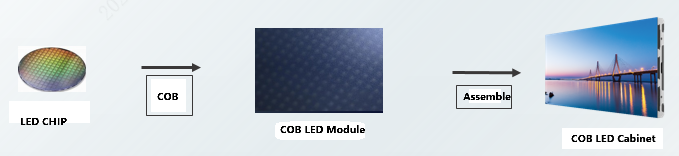
COB (chip-on-board), is a new LED packaging technology that mounts LED chips rather than LED beads directly on the Printed circuit board (PCB).

application of COB LED displays


  • High-density array of LED chips


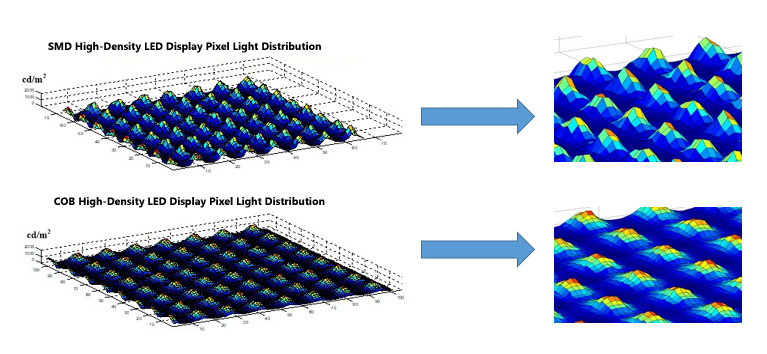
Because each LED chip is exposed, i.e., there are no lead frames, phosphor coatings, or lenses, they can be arranged and mounted very closely on a single COB LED module. Such a high-density array allows COB LEDs to produce more light output and greater light uniformity from the same area that a standard LED module might occupy. 

For example, COB LED technology can produce 38 times more LEDs on a 10mm x 10mm square PCB compared to DIP LED technology, and 8.5 times more LEDs compared to SMD LED technology. With COB LED technology, P1.2mm, P0.9mm, P0.6mm, P0.5mm, and even P0.3mm LED display screens can be achieved.


  • Fewer components 


The reduction in the number of parts required to operate the LED chips is another significant benefit of employing COB LED technology. Instead of the lens and other standard components of an LED package, COB LEDs power the multiple diode chips they house using a single circuit with only two connections. Each LED chip in this case produces less heat and has a lower failure rate thanks to the fewer components and removal of the conventional LED chip structure packaging.


  • Lower failure rate


The ability to limit the pixel failure rate to 1-9 pixels within 1 million display pixels is another feature of COB LED technology’s low failure rate. The current standard SMD LED technology in the display industry can only control the pixel failure ratio to one in 10,000, which is far from being able to meet the requirements of small-pitch LED display screens for ultra-high definition display.

We are all aware of the benefits of COB LED displays, including their extremely high contrast ratio, increased brightness, and wider color spectrum. Long-term improvements in COB LED display efficiency, current density, and lamp bead stability are possible thanks to the prospect of smaller pixel pitches, a more straightforward packaging technique, and good heat dissipation performance. This will encourage the ongoing development of Micro LED display screens.

In addition to assisting the display industry in its transition to the UHD age of p0.Xmm, COB LED technology also creates a new environment for creative, forward-thinking uses of LED display screens. Future XR and meta-universe applications will be continuously and thoroughly integrated with COB LED display technology. It keeps tightening up its specifications for the unit display area resolution level and other information-carrying capacity indications. Future high-end display applications for COB LED technology will be built on the cutting edge of ultra-micro pitch technology.

RIGARD small pitch LED screens


The secret to unlocking the enormous potential for future UHD display development is the specialized market for narrow-pitch display technology. You can consult for RIGARD narrow pixel pitch LEDs if you are looking for Mini LED screens or even Micro LED screens. We have a sizable market share in many different kinds of small-pitch LED displays thanks to our mastery of COB technology. Moreover, RIGARD fine pitch LED displays can offer you excellent image quality, and consistent and accurate color performance with refresh rates up to 3840 Hz, and brightness levels of 4000 nits. 

Want to learn more about COB LED technology and small-pitch LED display screens? RIGARD will be pleased to assist you if you contact us right away!

flexible LED screens for exhibition

Trade Show LED Displays Solution

in /by

Exhibitions and trade fairs started to get underway in full force as the epidemic is gradually under control globally. Major corporations have also started to actively market their brands and products at various fairs. Undoubtedly,  the expo is among the top platforms for most businesses to promote their brands and products. However, you need to employ trade show LED displays to increase your influence if you want to stand out among your peers.

LED trade show display solution


Trade Show LED Displays

With their adaptable and distinctive design, high clarity, contrast ratio, and refresh rate, among other features, LED display screens have been a key component in the trade show display as a display terminal device. With time, LCD and DLP displays in the exhibition have been replaced by LED display screens due to less competitiveness in terms of luminous technology principle, color, display effect, and lifespan. Moreover, the development of LED commercial displays, represented by fine-pitch LED displays, has greatly expanded the use of LED display screens in trade shows and exhibition halls.


Up to now, LED display screens have become the preferred display solution for various exhibitions, including trade shows, science and technology museums, planning exhibition halls, real estate exhibition halls, corporate exhibition halls, etc.

flexible LED screens for exhibition

How Trade Show LED Displays Benefit Your Businesses?

LED trade show displays enable you to showcase your products and promote your corporate image in a variety of innovative formats such as text, images, and video. Moreover, they enable your target customers to see the content of your items visually and clearly from a long distance and wide angle thanks to their large size. 


Trade show video displays give potential clients the chance to see a thorough overview of your company’s forthcoming advancements, goods, and services, which not only increases the attractiveness of your brand but also encourages participants to make purchases. Companies that utilize LED exhibition screens can immediately target more customers to their booths than those who don’t.


Furthermore, LED display technology has advanced to the point of perfection. Trade show LED displays may provide a richer and more stunning visual impression for your clients by integrating with naked-eye 3D, 5G, 8K, somatosensory, and other high-tech.

LED trade show displays combine high technology

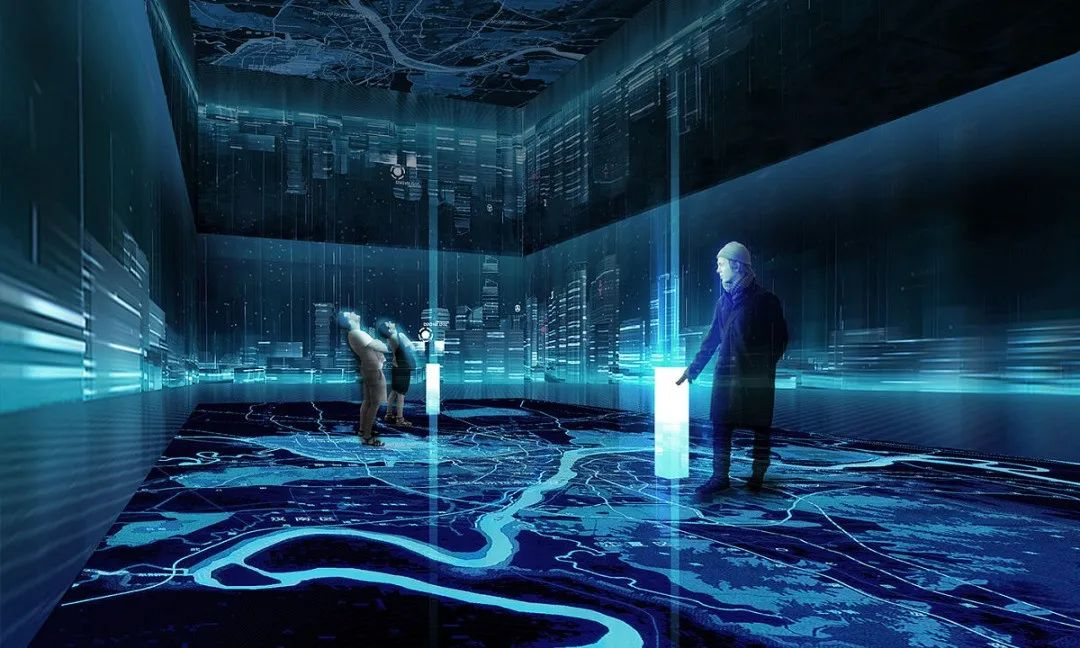
In terms of specific applications, the combination of small pitch LED display screens, transparent LED screens, flexible LED screens with naked-eye 3D, and 8K technology realizes creative display and high-definition display, bringing you overwhelming advantages. The combination of 5G and somatosensory technology with interactive LED floor screen and ceiling LED screens to build an immersive space guides the development of traditional static display to the dynamic display of technology.


On the road to digital and virtual technology development, LED trade show displays are always the significant display solution for exhibitions working to bring AR/VR, XR virtual technology, and meta-universe into people’s lives.


Where the Trade Show LED Displays are Applied o?

  1. The external wall of exhibition halls

By installing outdoor LED advertising boards on the exterior walls of exhibition halls to place advertisements, you may optimize the precise visitor flow and attract more clients to your booth. Besides, the exhibition organizers can update events and crucial information in real-time via the LED exhibition screens on the exterior wall of the exhibition hall, which helps to draw in potential attendees as well as encourage more businesses to participate in the exhibition.


  1. Pavilion entrance

The trade shows LED displays can also be applied at the entrance of the exhibition hall to provide attendees with a map of the exhibition, the latest news announcement, the exhibition activities, etc.


  1. Booth

LED trade show displays are an important tool for companies to market their brands in various exhibitions. By displaying product and brand information in high clarity, high contrast, and rich colors, LED screens for the exhibition can greatly immerse clients in your brand culture. They also encourage clients to take images and post them to social media channels for your secondary promotion, which improves foot traffic.

trade show LED displays

RIGARD LED Screens for Exhibition

RIGARD specializes in providing LED display solutions specifically for trade shows, exhibitors and exhibition halls. Whether you are just getting started or already inspired, we offer a dynamic range of trade show LED display solutions that will complement any booth design.


High resolution and large size are essential features for LED trade show displays in order to clearly present brand and product information to your target audiences. 


RIGARD has mastered the leading fine-pitch display technology to produce LED screens with a pixel pitch of

less than 1mm. With refresh rates of up to 3840Hz and brightness levels of up to 4000 nits, RIGARD LED screens are an excellent choice for trade show LED video displays to present graphics and video in Ultra High Definition (UHD) or 4K resolution.


RIGARD LED screens feature a compact design that allows for seamless stitching of very large LED exhibition screens. In addition, the 160° horizontal viewing angle and 140° vertical viewing angle allow for comfortable and high-definition visual enjoyment for viewers in different orientations.

RIGARD’s transparent LED screens at auto show

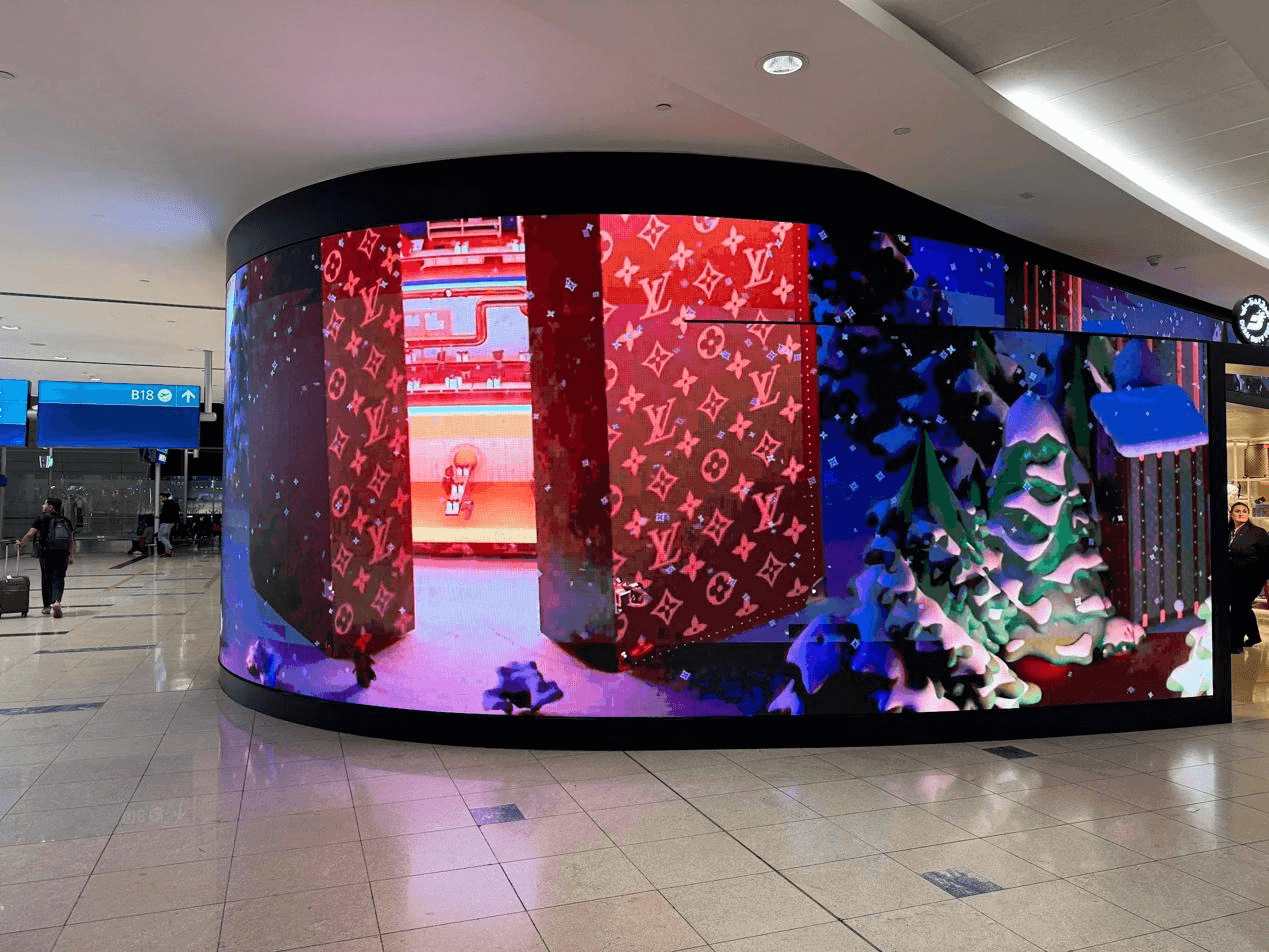
In a crowded exhibit hall, a cookie-cutter display is likely to keep your target audience from finding you. Our flexible LED screens, LED floor screens, and transparent LED screens give you the flexibility to create eye-catching and dynamic digital displays that offer unlimited scalability and unique design potential for your brand marketing.


Nowadays, trade show LED displays play an indispensable role in various exhibitions or trade fairs. No matter how much booth space you need for a corporate culture show, smart city showroom, property sales showroom, or a trade show, RIGARD LED can always help you design an LED exhibition display solution that fits your creative vision and makes your booth stand out.